

One upload
Every way to study
Drop in slides, PDFs, or homework photos. Get a study guide, flashcards, a quiz, a podcast, or a video, made only from your material.
How it works
Upload your files
Slides, PDFs, homework photos, or a lecture recording.
Pick a format
A study guide, notes, flashcards, a quiz, a podcast, or a video.
Study in minutes
Download it, or keep it saved in your class.
Pick how you want to study
America's War for Independence (1775–1783)
Timeline Overview
This single timeline captures the whole chapter — use it as your spine for everything else below.
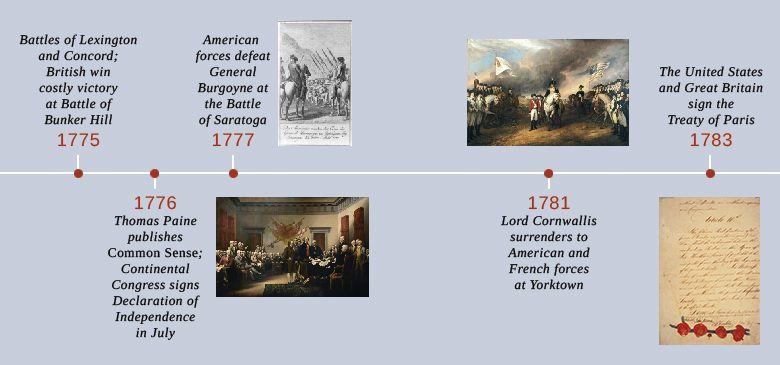
| Year | Key Event |
|---|---|
| 1775 | Battles of Lexington and Concord; British win a costly victory at Bunker Hill |
| 1776 | Thomas Paine publishes Common Sense; Continental Congress signs the Declaration of Independence (July) |
| 1777 | American forces defeat General Burgoyne at the Battle of Saratoga |
| 1781 | Lord Cornwallis surrenders to American and French forces at Yorktown |
| 1783 | The U.S. and Great Britain sign the Treaty of Paris |
Memory tip: Five dates, five turning points — 1775 (start), 1776 (declare), 1777 (turn), 1781 (win), 1783 (peace).
Colonial Resistance & the Outbreak of War (1775)
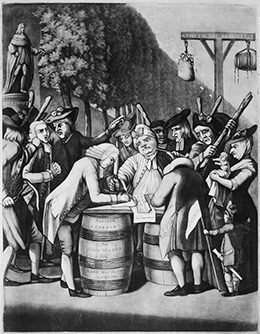
Before shots were fired, colonists enforced boycotts of British goods themselves. A colonist who refused to sign a non-importation agreement risked being tarred and feathered — a public shaming/punishment tactic.
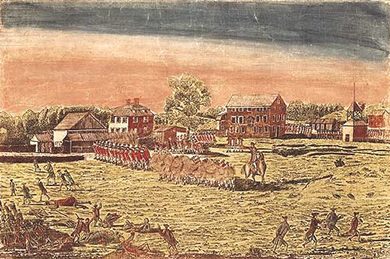
Fighting broke out at the Battles of Lexington and Concord (April 19, 1775). Printmaker Amos Doolittle, who volunteered to fight the British, created the only contemporary American visual records of these battles.
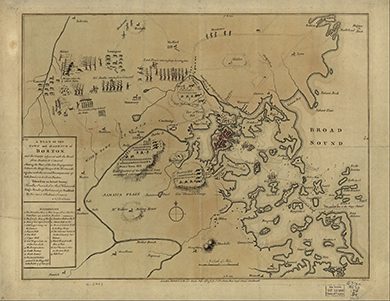
Colonial militias then besieged British-held Boston. A 1779 map shows the positions of British and Patriot troops around the city at the war's start.
At the Battle of Bunker Hill, the British (under General Thomas Gage) took the high ground only after colonial militias ran out of ammunition — but Gage still could not break the siege of Boston. A British cartoon mocked the rebellion by depicting it as an elaborate hairstyle.
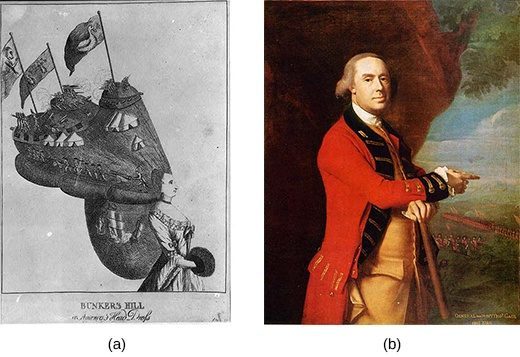
Common mix-up: Bunker Hill was a British battlefield "win," but it was so costly in casualties that it did little to break colonial resolve.
The Case for Independence (1776)
Thomas Paine's pamphlet Common Sense argued for full independence rather than reconciliation with Britain, and helped shift public opinion.
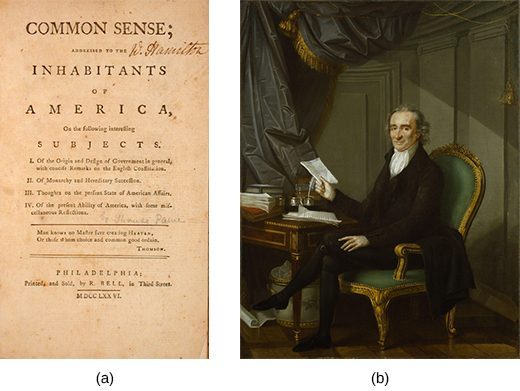
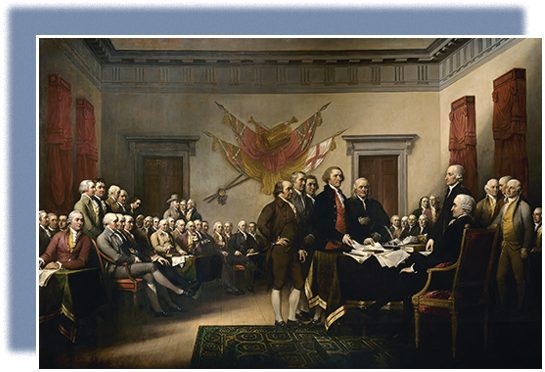
The Continental Congress then drafted and presented the Declaration of Independence, formally separating the colonies from an empire they shared deep cultural, historical, and economic ties with.
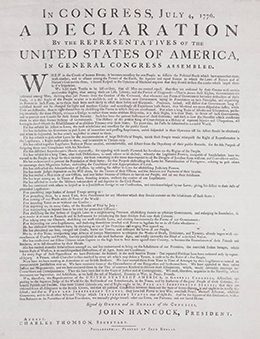
The Dunlap Broadside shown below, printed July 4, 1776, is considered one of the first published copies of the Declaration.
Later that year, Paine also wrote The American Crisis, a pamphlet meant to bolster morale during a difficult stretch of the war.
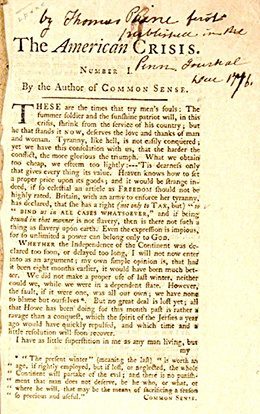
Building a Professional Continental Army
Two weeks after his appointment by the Continental Congress, George Washington took command of the Continental Army at Cambridge, Massachusetts (1775).
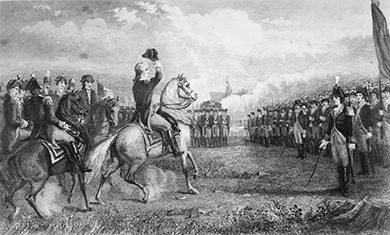
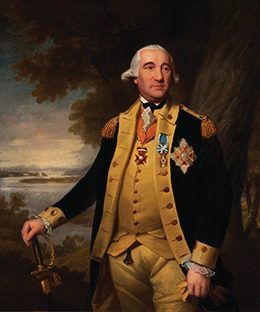
The army's fighting effectiveness improved dramatically once Prussian officer Friedrich Wilhelm von Steuben joined, helping transform it into a more professional force.
A period illustration shows the varied uniforms worn by American and allied soldiers during the war.
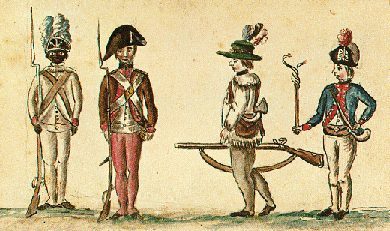
Turning Point: The Battle of Saratoga (1777)
In October 1777, American forces defeated and captured General John Burgoyne's army at Saratoga — a major turning point in the war.
Why it matters: Saratoga is widely treated as the war's turning point — it demonstrated the Continental Army could defeat a full British force, a fact worth remembering for any "why did France ally with the Americans?" style question.
The War Shifts South: Charleston & Greene (1780)
The Siege of Charleston was one in a series of Continental defeats in the South. In response, Congress placed General Nathanael Greene in command in late 1780; he went on to lead two crucial victories.
Yorktown: The British Surrender (1781)
At Yorktown, Lord Cornwallis did not surrender in person — he sent his officer, Charles O'Hara, to perform the ceremonial handover of the sword to General Benjamin Lincoln, while Washington (refusing to accept the sword from anyone but Cornwallis) looked on.
A popular print, "The World Turned Upside Down," used reversed roles (children caring for parents, stars below the earth) as a symbol of how dramatically the old order had been overturned.
Peace and Its Aftermath (1783)
The Treaty of Paris, signed September 3, 1783, was sealed by representatives of Great Britain (David Hartley) and the United States (John Adams, Benjamin Franklin, and John Jay).
After the war, many Loyalists — colonists who had remained loyal to Britain — left for other parts of the British Empire, such as New Brunswick, Canada.
Native American Alliances
Joseph Brant, a Mohawk leader allied with the British, was painted by two different artists (Gilbert Stuart, 1786; Charles Wilson Peale, 1797) — a reminder that Native nations were active, strategic participants in the war, not bystanders.
Key Terms
- American Crisis, The — Thomas Paine's 1776 pamphlet written to sustain morale during the war.
- Battle of Bunker Hill — costly 1775 British victory near besieged Boston.
- Battle of Saratoga — 1777 American victory that captured General Burgoyne's army; a war turning point.
- Battles of Lexington and Concord — April 19, 1775 clashes that opened the war.
- Cornwallis, Lord Charles — British general who surrendered (via a subordinate) at Yorktown, 1781.
- Common Sense — Thomas Paine's 1776 pamphlet arguing for independence.
- Continental Army — the colonial military force commanded by George Washington.
- Declaration of Independence — 1776 document formally separating the colonies from Britain.
- Dunlap Broadside — one of the first printed copies of the Declaration, printed July 4, 1776.
- Franklin, Benjamin / Adams, John / Jay, John — American representatives who signed the Treaty of Paris.
- Gage, General Thomas — British commander at the Battle of Bunker Hill/siege of Boston.
- Greene, General Nathanael — placed in command of Southern forces in 1780; won two crucial victories.
- Howe, General William — led British forces in America in the early years of the war.
- Loyalists — colonists who remained loyal to Britain; many emigrated after the war.
- Non-importation Agreement — colonial pledge to boycott British goods, enforced by threats like tarring and feathering.
- Paine, Thomas — political writer/activist behind Common Sense and The American Crisis.
- Siege of Boston — early war standoff between British forces and colonial militias.
- Siege of Charleston — a major Continental defeat in the Southern campaign.
- Steuben, Friedrich Wilhelm von — Prussian officer who professionalized the Continental Army.
- Treaty of Paris (1783) — agreement ending the war between the U.S. and Great Britain.
- Washington, General George — commander of the Continental Army.
- World Turned Upside Down — symbolic print reflecting the reversal of the old order after the British defeat.
- Yorktown, Siege/Surrender of — 1781 battle where Cornwallis's army surrendered, effectively ending major fighting.
- Brant, Joseph — Mohawk leader allied with the British during the war.
- Burgoyne, General John — British general whose army was captured at Saratoga in 1777.
Practice Prompts
- Put these events in chronological order: Battle of Saratoga, Declaration of Independence, Battles of Lexington and Concord, Treaty of Paris, Surrender at Yorktown.
- Fill in the blank: In 1775, the British won a costly victory at the Battle of _____, despite colonial militias running low on ammunition.
- What 1776 pamphlet helped convince colonists that independence — not reconciliation — was the right path?
- Fill in the blank: The Continental Congress signed the Declaration of Independence in July of ____.
- Why is the Battle of Saratoga (1777) considered a turning point in the war?
- Fill in the blank: __________, a Prussian officer, helped transform Washington's army into a more professional fighting force.
- What string of defeats in the South led Congress to place General Nathanael Greene in command in 1780?
- Fill in the blank: At Yorktown, Cornwallis sent his officer __________ to surrender the sword in his place.
- Name the three Americans who signed the Treaty of Paris in 1783.
- Based on "The Coming of the Loyalists," what happened to many colonists who stayed loyal to Britain after the war?
- Fill in the blank: A colonial merchant who wouldn't sign a __________ risked being tarred and feathered.
- Who was Joseph Brant, and what does his presence in this chapter tell you about Native American involvement in the war?
Example made from OpenStax U.S. History, Chapter 6 lecture slides (CC BY 4.0).
Top up when you need to
Droplets never expire. Ripple costs vary by format.
Starter Pack
Enough for a solid study session.
Crammer Pack
Our most common pick, enough to prep for all your exams.
Student Pro Max
A whole semester of Ripples in one go.